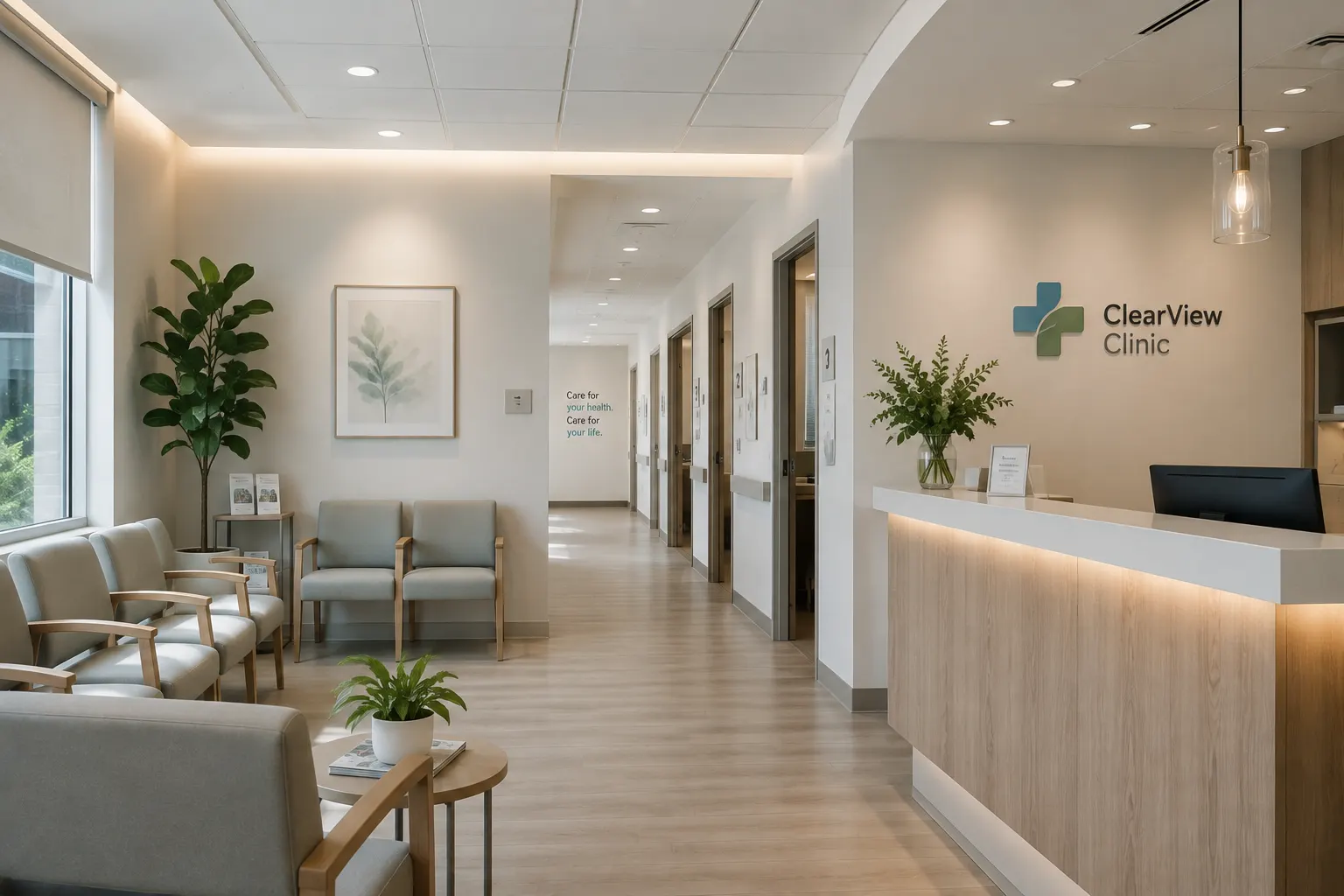
Scent marketing for healthcare and clinics is the careful, low-intensity use of fragrance in reception and waiting areas to create a calm, clean and professional atmosphere. It is an environment decision, comparable to lighting, furniture or music, and is never presented as a medical or therapeutic intervention. Because some patients and staff are sensitive to fragrance, a clinic programme is deliberately conservative in where it scents and how strongly.
Key takeaways
- Clinic scenting usually covers reception and waiting areas only.
- Treatment rooms, procedure rooms and clinical areas are generally not scented.
- Intensity is set lower than in hotels or retail.
- Fragrance sensitivities and any air-quality requirements are raised at the consultation, and can rule scenting out for specific areas.
- Scent Up makes no medical, therapeutic or health claims for fragrance.
Why Clinics Consider Scent
Patients often spend more unstructured time in a clinic's waiting area than anywhere else in the visit. That time shapes their impression of the clinic: how clean it feels, how calm, how well run.
Private clinics, dental practices, aesthetic clinics, specialist centres and medical groups in Thailand, the Philippines and Malaysia invest in the design of those spaces for that reason. Without attention, the waiting area can smell of disinfectant, the street outside or nothing in particular.
A light, considered fragrance in reception can contribute to a calmer, more welcoming impression. It does not, and should not be presented to, treat, heal or affect anyone's health.
Where to Scent, and Where Not To
| Area | Typical approach |
|---|---|
| Entrance and reception | The main zone, at a low intensity |
| Waiting areas | The same fragrance, kept subtle |
| Consultation rooms | Usually not scented; assessed case by case for non-clinical consultations |
| Treatment and procedure rooms | Not scented |
| Clinical, laboratory and sterile areas | Not scented |
| Washrooms | Optional, treated separately |
Keeping fragrance to public, non-clinical spaces is the simplest way to respect patients who may be sensitive, and to stay clear of any area with clinical air-quality requirements.
Fragrance Sensitivity and Air Quality
Some people are sensitive to fragrance, and patients may be unwell. A healthcare programme therefore starts with the question of whether, and where, scent is appropriate at all.
During the consultation, the clinic should share:
- Which areas patients and staff use, and for how long
- Any clinical areas with ventilation or air-quality requirements
- Any known fragrance sensitivities among staff
- Any internal policies on fragrance
The answers shape fragrance choice, intensity and placement, or lead to scenting being ruled out for specific areas. Ask any provider for the safety data sheets of the fragrance oils they propose, and check the materials against your own policies.
Choosing a Fragrance
Clinic fragrances are usually clean, light and fresh, chosen to feel calm and hygienic rather than perfumed. Heavy, sweet or very distinctive fragrances are generally unsuitable.
The fragrance is tested in the clinic at the intended intensity before it is installed permanently, and adjusted after staff have lived with it for a few weeks.
Clinic groups that want a recognisable identity across locations sometimes choose a signature scent, but kept at a conservative intensity.
Equipment and Intensity
Most clinics use compact standalone commercial scent diffusers in reception and waiting areas. Standalone units keep fragrance confined to the zones where it belongs, which matters in buildings where clinical and public areas sit close together.
HVAC scenting is generally not appropriate where the same air system serves clinical areas. It is only considered where public spaces have their own separate air handling.
Output is scheduled around clinic hours and set to the low end of the range. Placement keeps units out of patients' reach and away from clinical equipment.
Clinic Groups
Medical and dental groups with several locations can keep the same calm atmosphere in every clinic, with equipment and intensity configured for each one. Replenishment and servicing are scheduled across the group. Smart Scent Management describes how consistency and schedules are managed across sites.
Planning a Clinic Scent Programme
- Which areas are public, and which are clinical?
- Does any area have ventilation or air-quality requirements?
- Are there known fragrance sensitivities among staff or regular patients?
- Does the clinic control its own air conditioning?
- Is this one clinic, or a group?
Scent Up works with clinics and healthcare businesses in Thailand, the Philippines and Malaysia. Book a scent consultation to discuss whether scent suits your clinic and where.