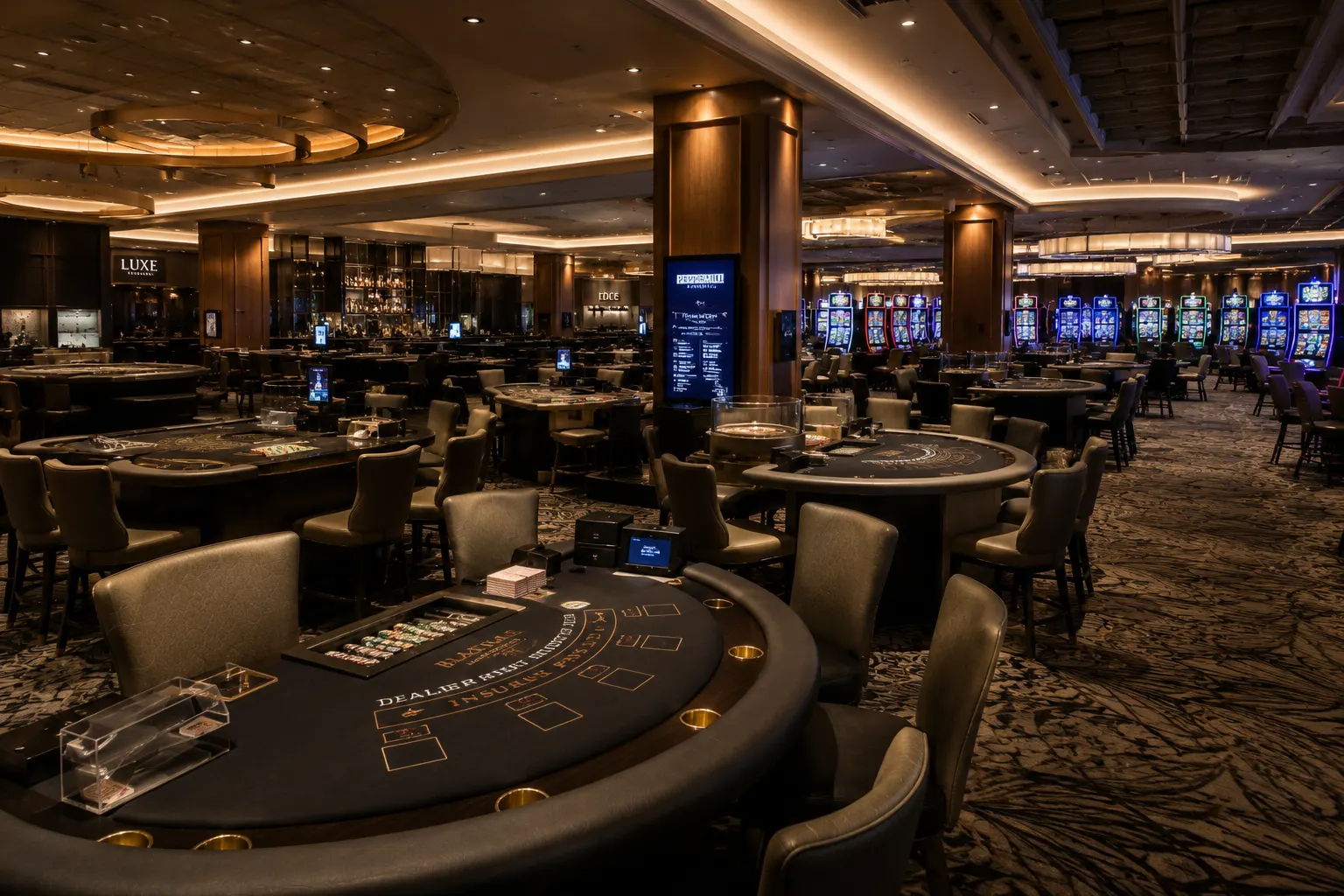
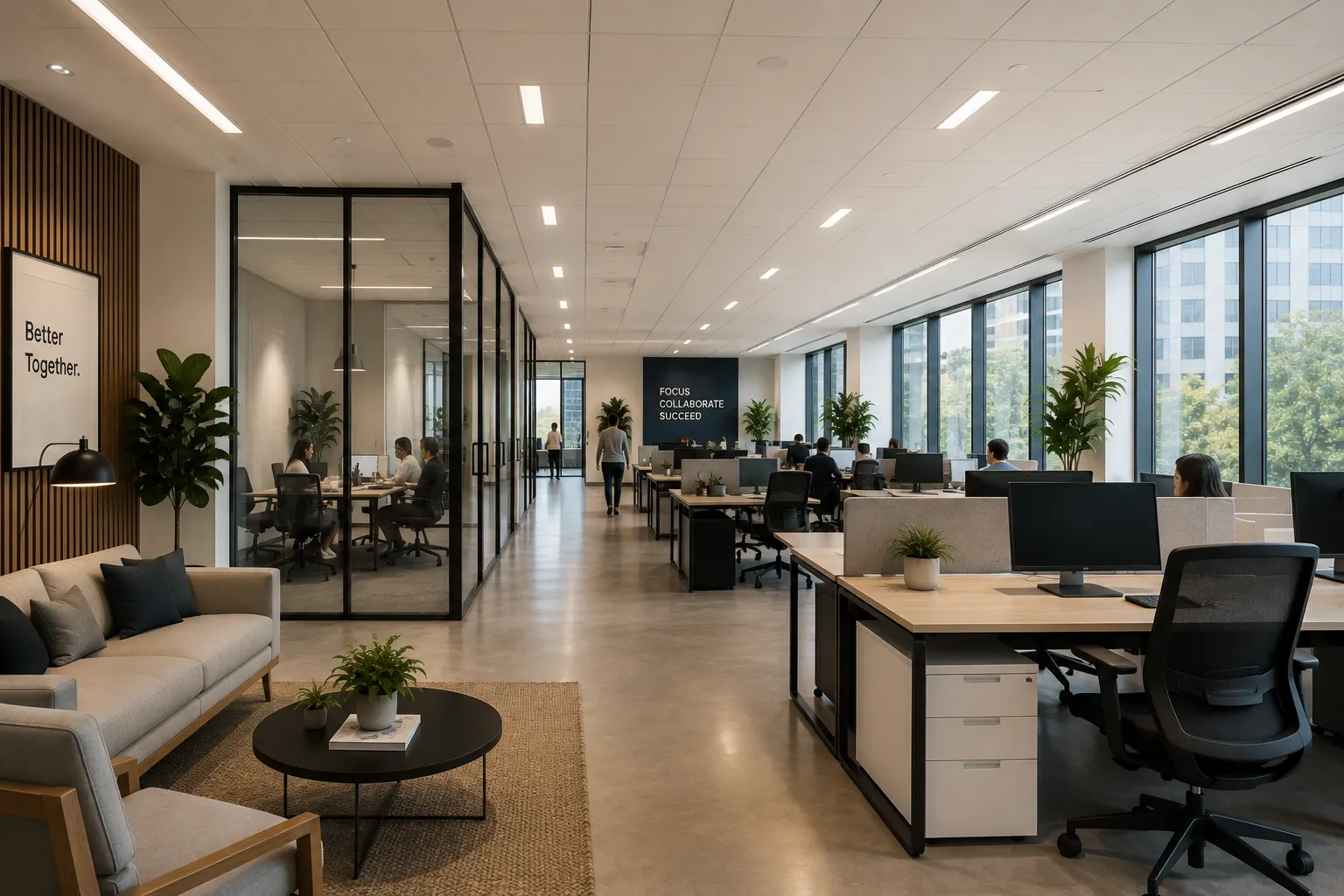
Scent marketing for offices is the planned use of fragrance in the parts of a workplace that clients, candidates and partners actually see: reception, meeting rooms and other client-facing zones. It treats the way an office smells as part of how the business presents itself, alongside interior design, lighting and how visitors are received. It is a brand and atmosphere decision, not a productivity programme.
Key takeaways
- Most office programmes scent reception, meeting rooms and client lounges, and leave general workspaces alone.
- Intensity is kept low: people spend whole working days in an office, so fragrance should be noticed on arrival and then fade into the background.
- Office towers usually suit standalone diffusers, because the building's central air conditioning is rarely controlled by a single tenant.
- Multi-office companies can keep one fragrance in every location a client might visit.
- Scent Up makes no claims that fragrance improves productivity, focus or wellbeing.
Why Offices Use Scent Marketing
For many businesses, the office reception is the only physical part of the company a client ever experiences. Professional service firms, banks, technology companies, regional headquarters and co-working operators invest in the design of that space because it signals how the business wants to be seen.
Fragrance is one more element of that impression. A considered, consistent scent in reception can make the space feel finished and deliberate, the same way good lighting or a well-chosen material does. Without a plan, the scent of an office is decided by cleaning products, the corridor outside, a nearby pantry or whatever the last visitor left behind.
The goal is not a strongly perfumed office. It is a reception and client area that smells clean, intentional and consistent with the brand, every day.
Which Areas of an Office to Scent
A practical office programme usually starts small and focuses on the spaces where presentation matters:
| Area | Typical approach |
|---|---|
| Reception and lobby | The main zone: the first impression for every visitor |
| Client meeting rooms | Light, consistent fragrance, often on a schedule around meeting hours |
| Client lounges and waiting areas | The same fragrance as reception, at a similar or lower intensity |
| Boardrooms | Assessed individually, as they are often closed rooms with their own airflow |
| General workspaces | Usually not scented |
| Pantries and washrooms | Treated separately from the brand fragrance, if at all |
Leaving open-plan desks unscented is a deliberate choice. People work there for hours, and some colleagues may be sensitive to fragrance. Keeping the programme to client-facing areas protects the experience for visitors without imposing a scent on everyone else.
Choosing a Fragrance for a Workplace
An office fragrance should reflect the business rather than follow a trend. A law firm, a creative agency and a technology company present themselves very differently, and their fragrances usually do too.
Most workplace programmes favour clean, light and understated fragrance families that stay pleasant over a long day. Heavy, sweet or very distinctive fragrances are usually better suited to retail or hospitality than to a working office.
Companies with a strong brand identity sometimes develop a signature scent: a fragrance created for the brand and used in every office, and sometimes at events or in a flagship retail space too. Others choose an existing fragrance from a professional library. Either way, the fragrance should be tested in the actual space before it is rolled out. See How to Create a Signature Scent for how that process works.
Equipment for Office Buildings
Most offices sit inside multi-tenant towers. The building's central air conditioning is controlled by the building management rather than the tenant, so HVAC scenting is usually not available or appropriate for a single office floor.
Standalone commercial scent diffusers are the usual choice instead. They are placed in or near the reception and meeting areas, sized to each room's volume, and set to run on a schedule that matches office hours, so fragrance is present when visitors arrive and switched off overnight and at weekends.
Where a company occupies a whole building, or several floors with their own air handling, HVAC scenting can sometimes cover a larger reception or lobby. That decision follows a site assessment of the air handling system.
For how units are placed and sized, see Scent Marketing Diffusers: Types and Placement.
Getting the Intensity Right
Intensity matters more in offices than almost anywhere else. A visitor should notice a pleasant, clean fragrance on arrival. A receptionist who sits in the same space all day should not find it tiring.
That balance is set during installation and adjusted afterwards. Calibration considers:
- The size and ceiling height of each space
- How often doors open and how air moves through the floor
- Who works in the space full time
- Office hours, so output can run only when needed
If anyone working in a scented area has a fragrance sensitivity or a medical concern, it should be raised during the consultation, so fragrance choice, intensity and placement can reflect it, or that area can be left unscented.
Consistency Across Multiple Offices
Regional companies often have offices in several cities or countries. A client who visits the Bangkok office and later the Manila or Kuala Lumpur office should recognise the same brand in each.
A multi-office programme keeps one fragrance across every location while configuring equipment and intensity for each office, because no two receptions share the same size, layout or airflow. Replenishment and servicing are scheduled across the network, so no office runs out. Smart Scent Management describes how schedules and consistency are managed across sites.
Planning an Office Scent Programme
Useful questions to answer before choosing equipment or a fragrance:
- Which areas do clients and visitors actually see?
- Does the company control the air conditioning, or does the building?
- How large are reception and meeting areas, and how high are the ceilings?
- Who works in those areas all day?
- Is an existing fragrance enough, or should the brand have its own?
- Is this one office, or part of a regional network?
The answers shape a recommendation for fragrance, equipment and schedule. Scent Up serves offices in Thailand, the Philippines and Malaysia. For an initial direction, try the Scent Solution Finder, or book a scent consultation.