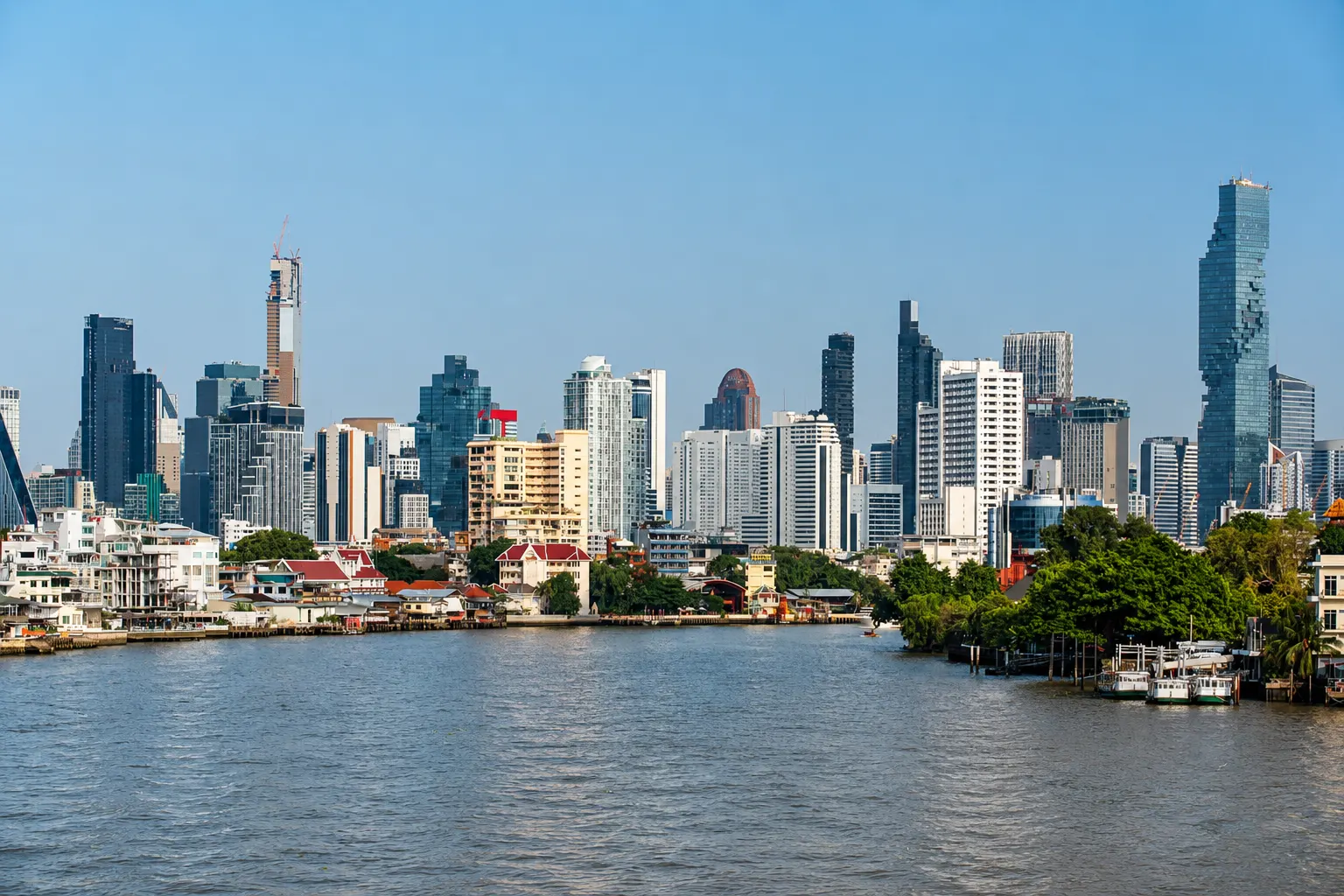
Thailand's hotels, resorts, retail destinations, wellness businesses and other customer-facing environments place significant emphasis on how physical spaces are designed and experienced.
Architecture, interior design, lighting, music and service all contribute to that experience. Fragrance can become another deliberately managed part of the environment.
Scent marketing in Thailand involves more than adding a pleasant fragrance to a room. A professional program considers the brand, physical space, airflow, fragrance direction, diffusion technology and ongoing management required to maintain an appropriate scent experience.
What Is Scent Marketing?
Scent marketing is the strategic use of fragrance within a commercial environment.
Rather than allowing the scent of a space to be determined by cleaning products, surrounding environments or incidental odours, businesses can select or develop a fragrance that complements the intended atmosphere.
A commercial scent marketing program can involve:
- Brand and property assessment
- Fragrance selection
- Signature scent development
- Scent zoning
- Diffusion system selection
- Equipment installation
- Intensity configuration
- Scheduling
- Fragrance replenishment
- Ongoing servicing
The appropriate strategy depends on the business and the property being scented.
For a broader introduction, read What Is Scent Marketing? or explore our Scent Marketing solution.
Hotel Scent Marketing in Thailand
Hotels and resorts are one of the clearest applications for commercial scent marketing in Thailand.
A hospitality property can contain several potential scent zones, including:
- Entrances
- Hotel lobbies
- Guest corridors
- Lounges
- Spa reception areas
- Selected public spaces
However, a city hotel in Bangkok and a resort property elsewhere in Thailand can have very different physical environments.
Open entrances, ceiling height, property layout, airflow and HVAC infrastructure can all influence how fragrance should be distributed.
Some hospitality businesses select an existing fragrance, while others develop a Signature Scent intended to become part of the property's wider sensory identity.
Read our Hotel Scent Marketing Guide or explore Hotels & Resorts for more information.
Scent Marketing for Resorts
Resort environments can introduce additional considerations because indoor, outdoor and semi-open areas may interact closely.
A resort might include:
- Arrival areas
- Reception
- Lobby
- Guest corridors
- Spa facilities
- Restaurants
- Lounges
- Villas
- Other shared areas
Not all of these environments should automatically be treated as a single scent zone.
Open-air or semi-open areas can also behave very differently from enclosed air-conditioned spaces.
For that reason, the scent strategy should identify where controlled fragrance diffusion is practical and where fragrance may dissipate too quickly to justify the same approach.
Spa and Wellness Scenting
Thailand's spa and wellness environments are another natural application for carefully managed fragrance.
These spaces may already incorporate several sensory elements, including lighting, materials, sound and ambient fragrance.
A professional scent program can provide greater control over how fragrance is delivered across areas such as:
- Reception
- Waiting areas
- Corridors
- Relaxation areas
- Selected treatment environments
However, intensity should be considered carefully.
Wellness environments do not necessarily benefit from stronger fragrance. The appropriate scent presence should complement the intended atmosphere and the function of each area.
Explore Spas & Wellness for more information.
Retail Scent Marketing in Thailand
Retail brands can use fragrance alongside visual merchandising, interior design, lighting and music as part of the physical store environment.
Potential applications range from individual boutiques and flagship stores to multi-location retail networks.
For a single store, the focus may be on creating an appropriate fragrance environment.
For a multi-location retailer, the challenge becomes maintaining a recognizable scent experience across branches with different:
- Floor areas
- Ceiling heights
- Layouts
- Airflow
- HVAC systems
- Operating hours
The same fragrance can be maintained while the equipment configuration is adapted to each location.
Read our Retail Scent Marketing Guide or explore Retail & Shopping Centres.
Shopping Centre Scenting in Thailand
Large shopping environments require a different strategy from individual stores.
A shopping centre operator may consider fragrance within selected common areas such as:
- Entrances
- Atriums
- Corridors
- Customer service areas
- Lounges
- Other shared spaces
Individual tenants may simultaneously operate their own fragrance programs.
Because these scent environments can interact, airflow and zoning should be considered carefully.
Large atriums, high ceilings, multiple floors and open entrances can also affect fragrance distribution.
For more information about these technical considerations, read How to Scent Large Commercial Spaces.
Scent Marketing for Offices and Workplaces
Commercial scenting can also be applied selectively within corporate environments.
Potential areas include:
- Reception
- Client lounges
- Meeting areas
- Showrooms
- Selected common spaces
The objective does not have to be fragrancing an entire office.
For many workplaces, a targeted strategy focused on appropriate client-facing environments may be more suitable.
Explore Offices & Workplaces for commercial applications.
Scent Marketing for Real Estate and Showrooms
Property sales galleries and show units are carefully designed presentation environments.
Fragrance can be considered alongside:
- Interior styling
- Materials
- Lighting
- Furniture
- Landscaping
- Overall presentation
Potential scent areas include entrances, reception areas, consultation spaces and show units.
Temporary sales galleries may also require different equipment strategies from permanent commercial properties.
Explore Real Estate & Showrooms for more information.
Automotive Showroom Scent Marketing
Automotive dealerships can incorporate fragrance into areas such as:
- Showroom floors
- Reception
- Customer lounges
- Consultation spaces
- Vehicle delivery areas
For dealership networks, a common fragrance can also form part of a consistent physical brand identity across locations.
The equipment configuration should still be assessed separately for each dealership because showroom size, ceiling height and airflow can vary considerably.
Explore Automotive for more information.
Developing a Signature Scent in Thailand
Businesses looking for a distinctive fragrance identity may choose to develop a signature scent.
The process begins with understanding the brand rather than selecting equipment.
Fragrance direction can consider:
- Brand positioning
- Interior design
- Materials
- Customer environment
- Desired atmosphere
- Existing brand identity
- Locations where the fragrance will be used
Once an appropriate fragrance direction has been established, it needs to be translated into a practical commercial deployment strategy.
Read How to Create a Signature Scent for Your Brand for a detailed explanation of the process.
Choosing a Commercial Scent System
There is no single scent machine that is appropriate for every commercial property in Thailand.
System selection can depend on:
- Floor area
- Ceiling height
- Total air volume
- Layout
- Airflow
- HVAC infrastructure
- Number of scent zones
- Operating hours
- Equipment accessibility
Smaller independent spaces may be suitable for standalone diffusion.
Larger properties may require higher-capacity equipment, several scent zones, HVAC integration or a combination of technologies.
Explore Commercial Scent Systems or read Commercial Scent Machines: What Businesses Should Know.
HVAC Scenting in Thailand
Many commercial properties in Thailand rely heavily on air-conditioning, but the presence of an HVAC system does not automatically mean HVAC-integrated scenting is appropriate.
HVAC scenting introduces fragrance into suitable parts of a property's air-handling infrastructure so that existing airflow can carry it toward intended areas.
Whether this approach is appropriate depends on the actual building.
Factors that should be assessed include:
- HVAC configuration
- Duct layout
- Airflow
- HVAC zoning
- Areas served by each air-handling system
- Equipment accessibility
HVAC integration may be considered for some hotels, shopping environments, large retail spaces and other connected commercial areas.
Read HVAC Scenting Explained for a detailed overview of how the technology works.
Thailand's Climate and Scent Distribution
Thailand's warm climate means air-conditioning and ventilation can play an important role in many commercial environments.
However, scent distribution should still be assessed property by property.
A fully enclosed air-conditioned retail store can behave very differently from a resort lobby with large open entrances.
Other factors can include:
- Frequently opening doors
- Indoor-outdoor transitions
- Semi-open architecture
- Mechanical ventilation
- High ceilings
- Existing air movement
These conditions can influence fragrance distribution and equipment placement.
Increasing fragrance output should not automatically be used to compensate for difficult airflow.
The objective is controlled distribution rather than simply producing a stronger scent.
Scent Zoning for Large Properties
Large commercial environments should not automatically be treated as a single fragrance zone.
A hotel, resort or shopping centre can contain spaces with very different functions and airflow conditions.
Scent zoning allows fragrance delivery to be configured according to those differences.
Individual zones may use different:
- Intensity settings
- Operating schedules
- Equipment configurations
- Diffusion approaches
They do not necessarily need different fragrances.
A common signature scent can still be maintained while its delivery is adapted to each environment.
Managing Scent Across Multiple Locations
Hospitality groups, retailers, dealership networks and other businesses operating several properties face an additional challenge:
How do you keep the fragrance experience consistent when every location is physically different?
Multi-location scent management can involve:
- Maintaining the core fragrance identity
- Configuring equipment by property
- Coordinating schedules
- Managing fragrance supply
- Maintaining equipment
- Adding new locations
- Making site-specific adjustments
Smart Scent Management can support centralized oversight while allowing individual properties to retain configurations appropriate to their environments.
Local Installation and Ongoing Service
A commercial scent program does not end when the equipment is installed.
Fragrance is consumed over time, equipment requires maintenance and settings may need adjustment.
Depending on the program, ongoing service can include:
- Fragrance replenishment
- Equipment inspection
- Intensity adjustments
- Schedule changes
- Maintenance
- Troubleshooting
- Periodic reassessment
This becomes particularly important for businesses operating several locations where inconsistent maintenance can gradually produce different fragrance experiences between properties.
How Much Does Scent Marketing Cost in Thailand?
There is no universal price for commercial scent marketing in Thailand.
Cost can depend on:
- Property size
- Number of scent zones
- Equipment requirements
- Diffusion technology
- Fragrance selection or development
- Installation requirements
- Number of locations
- Fragrance consumption
- Ongoing service
Two properties with similar floor areas can require different systems because their air volume, layout and HVAC infrastructure are different.
Read How Much Does Commercial Scent Marketing Cost? for a detailed explanation of the factors affecting overall investment.
Renting vs Purchasing Scent Equipment
Businesses may also need to decide how their commercial scent equipment will be structured financially.
Depending on the available arrangement, equipment may be purchased, rented or included within a wider managed-service model.
The comparison should consider more than the initial equipment price.
Important factors can include:
- Upfront cost
- Ongoing fees
- Maintenance responsibility
- Fragrance supply
- Technical support
- Contract terms
- Equipment replacement
- Future expansion
Read Scent Machine Rental vs Purchase for a detailed comparison.
Planning a Scent Marketing Program in Thailand
Before selecting fragrance or equipment, businesses should establish the requirements of the property.
Useful questions include:
- What type of commercial environment is being scented?
- Which areas should receive fragrance?
- How large and open are those spaces?
- How does air move through the property?
- What HVAC infrastructure is available?
- Is an existing fragrance appropriate or is a signature scent required?
- Does the property require several scent zones?
- Is this a single location or part of a wider portfolio?
- Who will manage fragrance replenishment and servicing?
- Will additional locations be added later?
These answers create the foundation for selecting an appropriate fragrance, diffusion system and operating strategy.
Scent Marketing Solutions in Thailand
Effective scent marketing brings together brand strategy, fragrance, diffusion technology, property assessment and ongoing management.
The appropriate solution should reflect the actual environment rather than applying the same equipment and settings to every property.
Scent Up provides commercial scent marketing solutions in Thailand across hospitality, retail, wellness, corporate, real estate and other customer-facing environments.
Explore our dedicated Thailand page for information about Scent Up's commercial scent marketing solutions in the market.
For an initial technology direction, use the Scent Solution Finder, or book a consultation to discuss your property and scent marketing requirements.