
Key takeaways
- HVAC scenting connects a scent diffusion unit to a building's air handling system, so fragrance is carried through the ductwork with the air that is already being conditioned and circulated.
- It is usually the better approach for large, open-plan or connected spaces, where individual standalone diffusers tend to leave strong spots near each unit and weak coverage between them.
- It is not automatically right for every large building: the HVAC system type, ductwork layout, zoning and airflow have to be assessed first.
- Zoning and scheduling let different areas run at different intensities, and let fragrance follow occupancy instead of running at one level all day.
- An HVAC scent system needs ongoing service — fragrance replenishment and adjustments to intensity and schedules once it is live.
What is HVAC scenting?
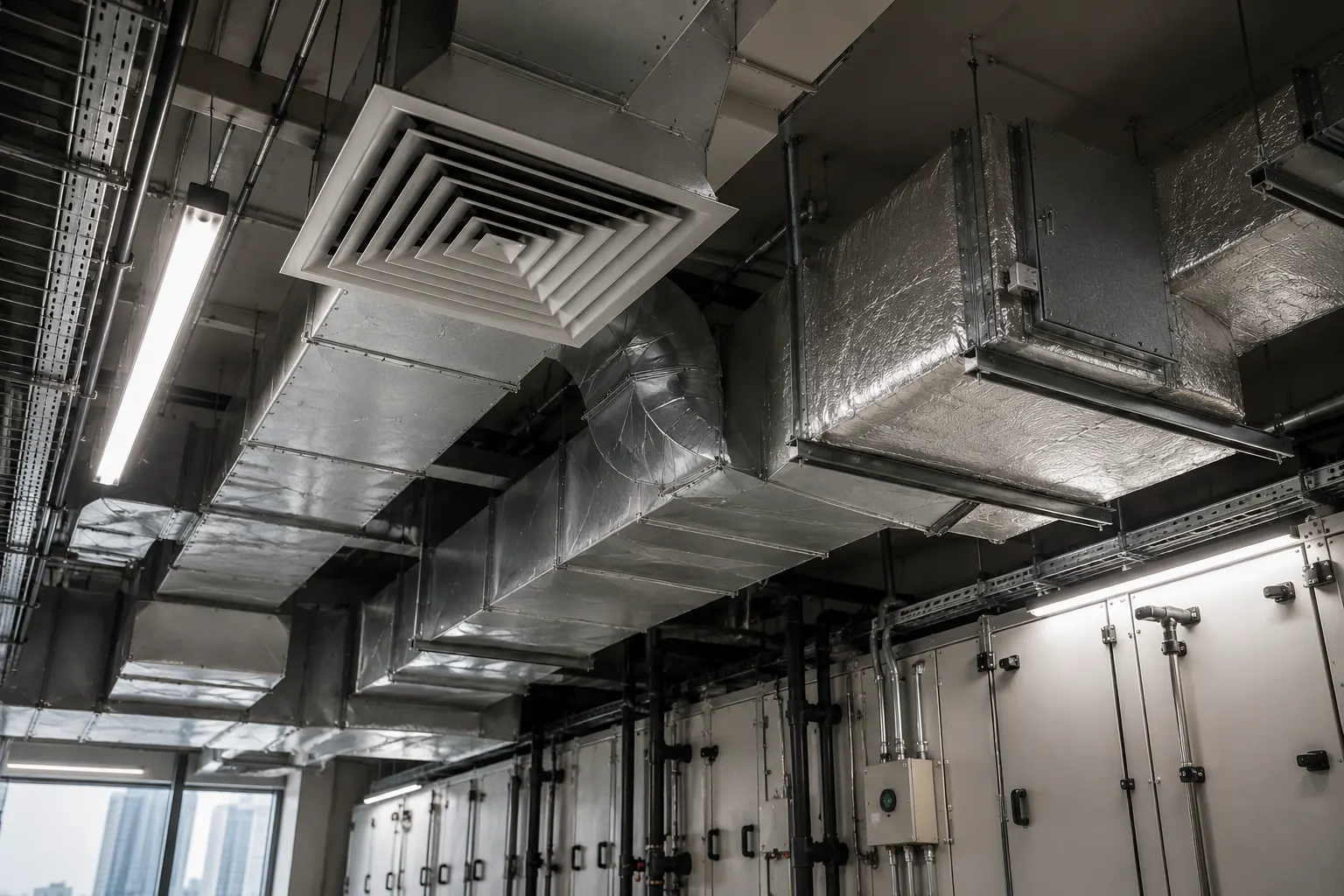
HVAC scenting is the distribution of fragrance through a building's heating, ventilation and air-conditioning (HVAC) system. A scent diffusion unit is connected to the air handling unit or to the supply ductwork, and releases fragrance into the air stream at a controlled rate. The building's own air handling then carries that fragrance into the occupied spaces, the same way it already distributes cooled or heated air.
The alternative is standalone diffusion: individual scent machines placed in, or near, each area that needs fragrance. Both are legitimate approaches. They suit different kinds of space.
How does HVAC scenting work?
An HVAC scenting setup has three working parts:
- The diffusion unit. A commercial scent machine sized for the air volume it has to serve, installed next to the air handling equipment rather than in guest-facing areas.
- The connection point. The unit releases fragrance into the air stream at a point chosen during the site assessment — typically at or near the air handling unit, or into a supply duct serving a specific zone.
- The controls. Output intensity and operating schedules are configured so fragrance runs when the space is occupied and at a level suited to it.
Because fragrance moves with the building's own airflow, it reaches areas a standalone unit would struggle to cover evenly, and the equipment stays out of sight.
HVAC scenting vs standalone diffusers
| HVAC scenting | Standalone diffusers | |
|---|---|---|
| How fragrance is delivered | Through the building's air handling and ductwork | From individual units placed in or near each space |
| Best suited to | Large, open-plan or connected areas — lobbies, malls, casino floors, multi-zone properties | Smaller or separate spaces — boutiques, reception areas, meeting rooms, single zones |
| Coverage | Follows the building's airflow, so it can be more even across a large area | Strongest near each unit; large spaces need several units carefully placed |
| Visibility | Equipment sits with the HVAC plant, out of guest areas | Units sit in or near the space, often wall-mounted or discreetly placed |
| Different scents per area | Possible where the ductwork and zoning separate those areas | Straightforward — each unit can run its own fragrance |
| Depends on | A suitable, accessible HVAC system | A power point and suitable placement |
| First step | HVAC and airflow assessment | Space and placement assessment |
Many properties use both: HVAC scenting for the large public areas and standalone units for zones the ductwork doesn't serve separately, such as a spa or a meeting suite.
When is HVAC scenting the right choice?
HVAC scenting is usually worth assessing when a space is:
- Large and open-plan — hotel lobbies and atriums, shopping centre concourses, casino and gaming floors, showrooms.
- Made up of connected areas that should feel consistent — a lobby that flows into lounges and corridors.
- A place where equipment must be invisible — premium environments where a visible diffuser would look out of place.
Standalone diffusion is usually the better starting point for smaller independent spaces, for areas that need a different fragrance from their surroundings, and for buildings where the HVAC system is not accessible or not suitable.
Is every building's HVAC system suitable?
No — and suitability should be checked before any recommendation is made. An HVAC scenting assessment looks at:
- System type and capacity — how the building's air is actually handled and distributed.
- Ductwork layout — which supply ducts serve which areas, and whether zones can be treated separately.
- Zoning — whether areas that need different intensities (or different fragrances) are served by different air handling.
- Airflow in occupied areas — how air really moves through the spaces people use, including doors, openings and return air paths.
- Access — where equipment can be installed and serviced without disrupting operations.
The assessment decides where fragrance is introduced and how the system is configured, so coverage is even rather than concentrated near the connection point. See HVAC Scenting for how Scent Up approaches this.
Can different areas have different scents or intensities?
Yes, where the building allows it. Scent zoning divides a property into areas that each have their own intensity and schedule — for example a lobby, a spa and back-of-house offices. With HVAC scenting, zoning depends on which areas are served by separate air handling or ductwork. Where the ductwork doesn't separate two areas, a standalone unit can handle the area that needs different treatment.
A zoned program doesn't have to use different fragrances. Often one signature scent runs throughout, with its intensity adjusted to each area.
How is intensity controlled?
Intensity is set by the diffusion unit's output and by scheduling, and it is calibrated to each zone's air volume and occupancy. The goal is a fragrance that is noticeable on arrival without being overpowering. Settings are refined after installation, once the fragrance can be experienced in real operating conditions — a lobby at 8am behaves differently from the same lobby at 8pm.
What does ongoing service involve?
An HVAC scent system is not a one-time installation. Ongoing service typically covers:
- Fragrance replenishment before the supply runs out
- Equipment checks and maintenance
- Adjusting intensity and schedules as seasons, occupancy or opening hours change
- Reviewing coverage if the building's use or layout changes
Frequently asked questions
Does HVAC scenting work in hot, humid climates like Thailand, the Philippines and Malaysia? HVAC scenting is well suited to air-conditioned commercial buildings, which are the norm for hotels, malls and offices in Southeast Asia. What matters is how the specific building's air is handled and how often doors open to the outside, which the site assessment checks.
Is HVAC scenting better than standalone diffusers? Neither is better in general. HVAC scenting suits large, open or connected areas where even coverage and hidden equipment matter; standalone diffusers suit smaller or separate spaces. Many properties combine the two.
Where is the equipment installed? The diffusion unit is installed with or near the HVAC equipment it connects to, so nothing is visible in guest-facing areas.
Next steps
To find out whether HVAC scenting suits a specific building, start with an assessment of its air handling. Explore HVAC Scenting, compare it with standalone options in Commercial Scent Systems, read How to Scent Large Commercial Spaces, or book a scent consultation.