
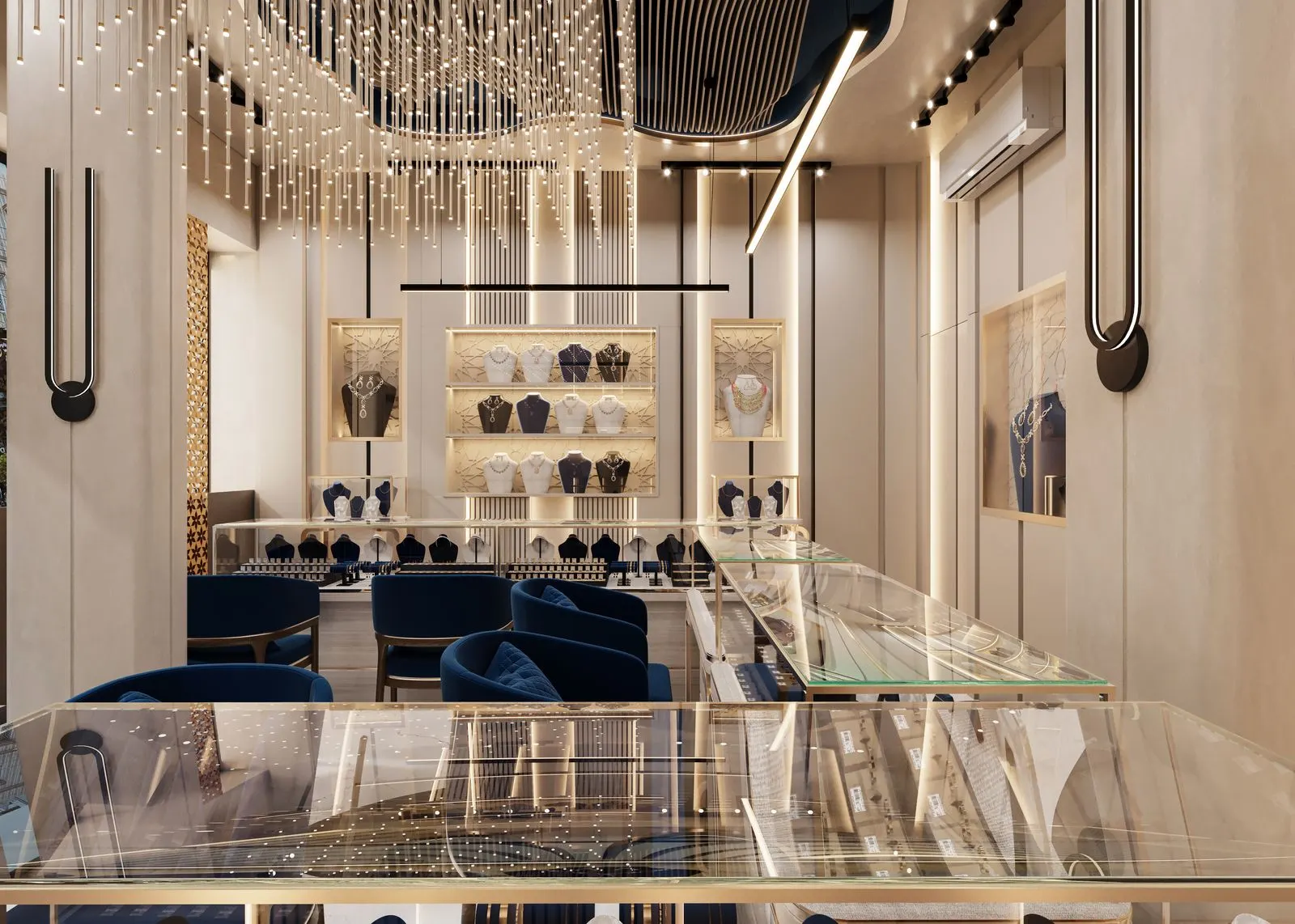
Retail scent marketing is the deliberate use of fragrance in stores, shopping centres and other retail spaces as part of the brand experience — alongside visual merchandising, lighting, materials, music and service — rather than treating scent as an air-freshening function.
Key takeaways
- Retailers either choose a fragrance from an existing collection or develop a signature scent that becomes part of the brand.
- Each store is assessed on its own: size, ceiling height, open or closed shopfront, and airflow decide the equipment, not a generic chart.
- Entrances, main sales floors and fitting or lounge areas are often treated as separate scent zones; food and product-testing areas need care.
- Most stores use standalone diffusers; large-format stores and shopping centres often use HVAC scenting.
- Retail chains keep one fragrance across every branch, with equipment and settings configured per store and serviced on a schedule.
For individual stores, the strategy may focus on creating an atmosphere that complements the brand. For larger retail networks, the challenge expands to maintaining a recognizable fragrance experience across locations with different layouts, airflow and operating conditions.
What Is Retail Scent Marketing?
Retail scent marketing is the strategic use of fragrance within stores, shopping environments and other customer-facing retail spaces.
Rather than selecting a fragrance solely because it smells pleasant, the scent is considered alongside the broader identity and atmosphere of the brand.
A retail scent strategy can involve:
- Fragrance selection
- Signature scent development
- Scent zoning
- Diffusion system selection
- Equipment placement
- Intensity control
- Operating schedules
- Multi-location management
- Fragrance replenishment and servicing
The appropriate approach depends on the type of store, physical environment and role fragrance is intended to play within the overall brand experience.
For a broader introduction, see our guide to commercial scent marketing.
Creating a Signature Scent for a Retail Brand
Some retailers choose a fragrance from an existing collection, while others develop a fragrance specifically for their brand.
A Signature Scent can translate elements of a brand's identity into a consistent fragrance direction.
The development process may consider factors such as:
- Brand positioning
- Interior design
- Materials and colours
- Product category
- Customer environment
- Desired atmosphere
- Existing sensory identity
The objective is not necessarily to create the strongest or most unusual fragrance.
It is to develop a scent direction that feels appropriate within the environment and can be reproduced consistently as the brand grows.
Flagship Stores and Signature Scent Development
A flagship store can provide a useful environment for introducing or evaluating a signature scent because it often represents the brand's physical identity in greater detail.
However, a retail scent program does not have to begin with a flagship.
A fragrance strategy can also be developed for:
- A single independent store
- A new retail concept
- A group of branches
- An established national network
- A regional retail portfolio
When a program will eventually extend across multiple locations, scalability should be considered from the beginning.
A fragrance that works well in one flagship location still needs an appropriate diffusion and operating strategy for every additional store.
Why the Same Scent System Doesn't Fit Every Store
Consistency does not necessarily mean installing identical equipment in every branch.
Stores within the same retail network can have very different physical environments.
One location may be a compact enclosed boutique, while another may have:
- Higher ceilings
- A larger sales floor
- Open entrances
- Multiple levels
- Different HVAC infrastructure
- Greater customer traffic
The same signature fragrance can be maintained while the commercial scent systems used to distribute it vary according to each property's requirements.
This distinction becomes particularly important as a retail scent program expands.
Where Should Fragrance Be Used in a Retail Store?
Not every area of a store needs the same fragrance intensity.
A retail scent plan may consider several zones.
Entrance
The entrance is often the transition between a shopping centre, street or other external environment and the retailer's own branded space.
Fragrance here should account for air exchange caused by open doors and customer movement.
Main Sales Floor
The sales floor is typically the largest customer-facing scent zone.
Equipment selection and placement depend on its size, ceiling height, layout and airflow.
Fitting Rooms
Fitting rooms are smaller and more enclosed than the main sales floor.
Because fragrance can accumulate differently in enclosed spaces, they may require a more restrained setting or separate treatment.
VIP and Consultation Areas
Luxury retailers and other businesses with private consultation areas may choose to control these spaces independently from the main floor.
Back-of-House Areas
Staff and operational areas do not automatically need to participate in the customer-facing fragrance program.
Separating these environments can prevent unnecessary fragrance distribution outside the intended experience.
Retail Scent Zoning
Scent zoning means configuring fragrance according to different areas of a property rather than assuming the entire store should receive identical treatment.
This becomes especially useful in large-format or multi-level retail environments.
Different zones can have different:
- Diffusion requirements
- Intensity settings
- Operating schedules
- Equipment configurations
Zoning does not necessarily mean using a different fragrance in every area.
In many cases, maintaining the same core fragrance while adjusting how it is delivered provides greater consistency across the customer journey.
Standalone vs HVAC Scenting for Retail
Retail environments can use standalone diffusion, HVAC-integrated scenting or a combination of both.
Standalone scent machines may be appropriate for individual stores, independent zones or spaces where direct local control is useful.
HVAC scenting may be considered for larger retail environments with suitable air-handling infrastructure.
Large stores or shopping environments may also use multiple technologies across different areas.
The correct approach depends on:
- Store size
- Ceiling height
- Airflow
- HVAC configuration
- Number of scent zones
- Equipment accessibility
- Desired coverage
For larger environments, read How to Scent Large Commercial Spaces.
Retail Stores and Shopping Centres Require Different Strategies
An individual retail store and the shopping centre surrounding it are separate scent environments.
A shopping centre operator may use fragrance within:
- Entrances
- Atriums
- Common areas
- Corridors
- Lounges
- Selected public zones
Individual retailers, meanwhile, may use their own fragrance within their leased spaces to support their specific brand identity.
These programs do not necessarily need to use the same fragrance.
What matters is understanding where each scent zone begins and how airflow between neighbouring environments could affect fragrance distribution.
Seasonal Fragrance Strategies
Retail environments frequently change visually throughout the year through campaigns, product launches and seasonal merchandising.
Fragrance strategy can also evolve, but frequent changes should be approached carefully when the scent is intended to function as a recognizable brand element.
One approach is to maintain a core fragrance direction while introducing carefully considered seasonal variations or adjustments.
Another is to maintain the same signature fragrance throughout the year and use scheduling or intensity changes where appropriate.
The correct approach depends on whether fragrance is being used primarily for atmosphere, campaigns or long-term sensory branding.
Maintaining Consistency Across Multiple Stores
Multi-location retail scenting introduces an operational challenge:
How do you create a consistent brand experience when every store is physically different?
Consistency begins with the fragrance itself, but it also depends on how that fragrance is delivered.
Each location may require its own assessment of:
- Floor area
- Ceiling height
- Airflow
- HVAC infrastructure
- Operating hours
- Customer traffic
- Scent zones
- Equipment capacity
- Diffusion settings
This means consistency should be based on the intended fragrance experience, not necessarily identical machine settings at every location.
Managing Scent Across a Retail Network
As the number of locations grows, managing each scent system independently can become increasingly complex.
A coordinated retail program may need to manage:
- Operating schedules
- Fragrance intensity
- Equipment status
- New store deployments
- Fragrance replenishment
- Maintenance
- Location-specific adjustments
Smart Scent Management can support centralized oversight while allowing individual stores to retain settings appropriate to their physical environments.
This becomes particularly useful for brands expanding across cities, countries or regions.
Adding New Stores to an Existing Scent Program
Once a retail brand has established its fragrance identity, new locations can be incorporated into the existing program.
However, the new store should still be assessed rather than simply copying the equipment configuration from another branch.
The process can include:
- Reviewing the new store's layout and size
- Assessing airflow and HVAC infrastructure
- Identifying customer-facing scent zones
- Selecting appropriate diffusion equipment
- Applying the established fragrance
- Configuring operating schedules
- Testing and adjusting intensity
This approach helps maintain a recognizable fragrance identity while respecting the physical differences between locations.
How Many Scent Machines Does a Retail Store Need?
There is no universal number based only on floor area.
A compact store may require a single appropriately sized system, while a larger or divided environment could require several independent zones or another diffusion approach.
Ceiling height, airflow, entrances and HVAC configuration can all affect the equipment requirement.
Read How Many Scent Machines Does a Business Need? for a more detailed explanation.
Planning a Retail Scent Marketing Program
Before selecting fragrance or equipment, establish what the scent program is intended to accomplish within the physical brand environment.
Useful questions include:
- Is this for one store or an entire network?
- Is there an existing brand fragrance?
- Which customer-facing areas should be scented?
- Are any areas intended to remain unscented?
- How large is each location?
- What HVAC infrastructure is available?
- Do stores require independent scent zones?
- Will the program expand to future locations?
- Who will manage replenishment and servicing?
Answering these questions creates a stronger foundation for choosing the fragrance, equipment and operating model.
Build a Consistent Retail Scent Experience
A successful retail scent program is not simply about making stores smell pleasant.
It requires coordination between brand identity, fragrance, physical space, diffusion technology and ongoing management.
For a single store, that may mean selecting an appropriate fragrance and scent system. For a multi-location retailer, it means creating a fragrance strategy that can remain recognizable while adapting technically to different properties.
Explore our Retail & Shopping Centres solutions to learn how Scent Up approaches commercial scenting for retail environments.
You can also use the Scent Solution Finder for an initial technology direction, or book a consultation to discuss your store, shopping environment or retail network.